
Assets parts - MXSuite
Full control over your spare parts inventory
Organise, track and optimise all your parts across the fleet.
10.000+ users in over 70 countries manage their fleet with MXSuite





Never run out of spare parts again
The MXSuite Assets Parts module gives you real-time insight into your current stock across the fleet. Know exactly which parts you have, where they are and what documentation is attached. From filters and fittings to full compliance documents, everything is organised and available when you need it.

Stay in control
You always know what you have, where to find it and whether it meets your defined stock levels.
Work smarter
Easily import and export via Excel, print labels and store manuals, supplier details and photos directly with each item.
Focus on what’s important
Quickly find the right part with all documentation, stay compliant and focus on maintenance instead of searching.
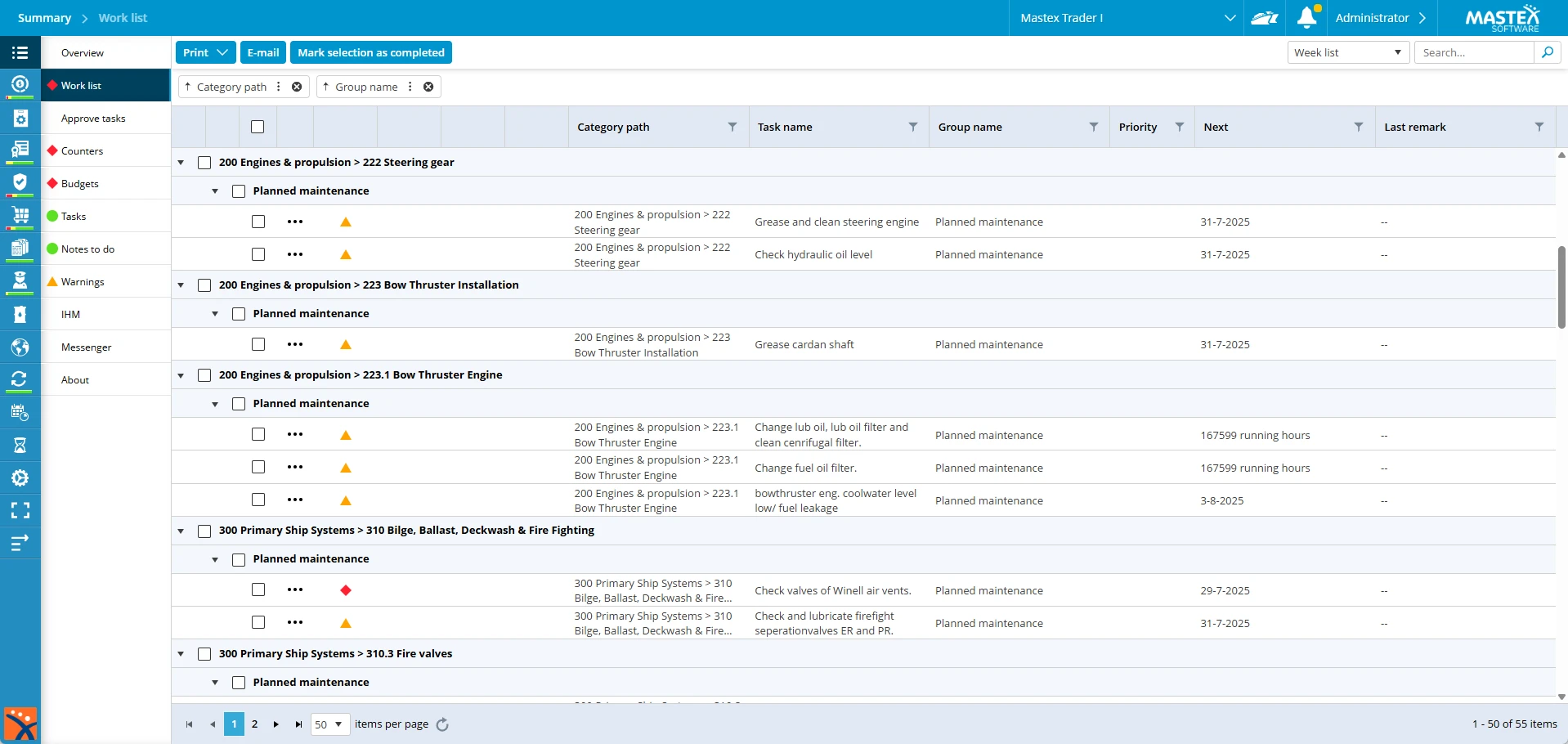
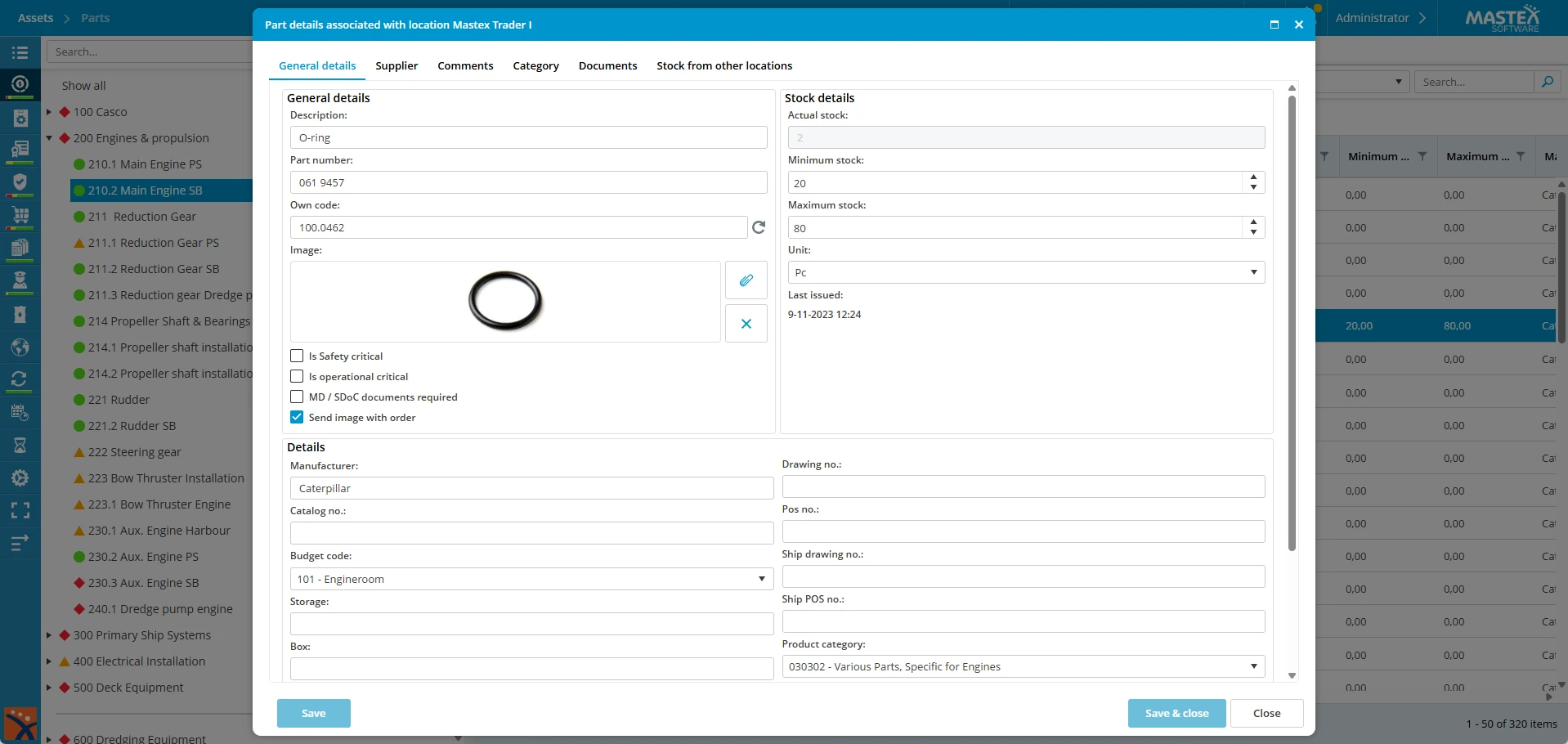
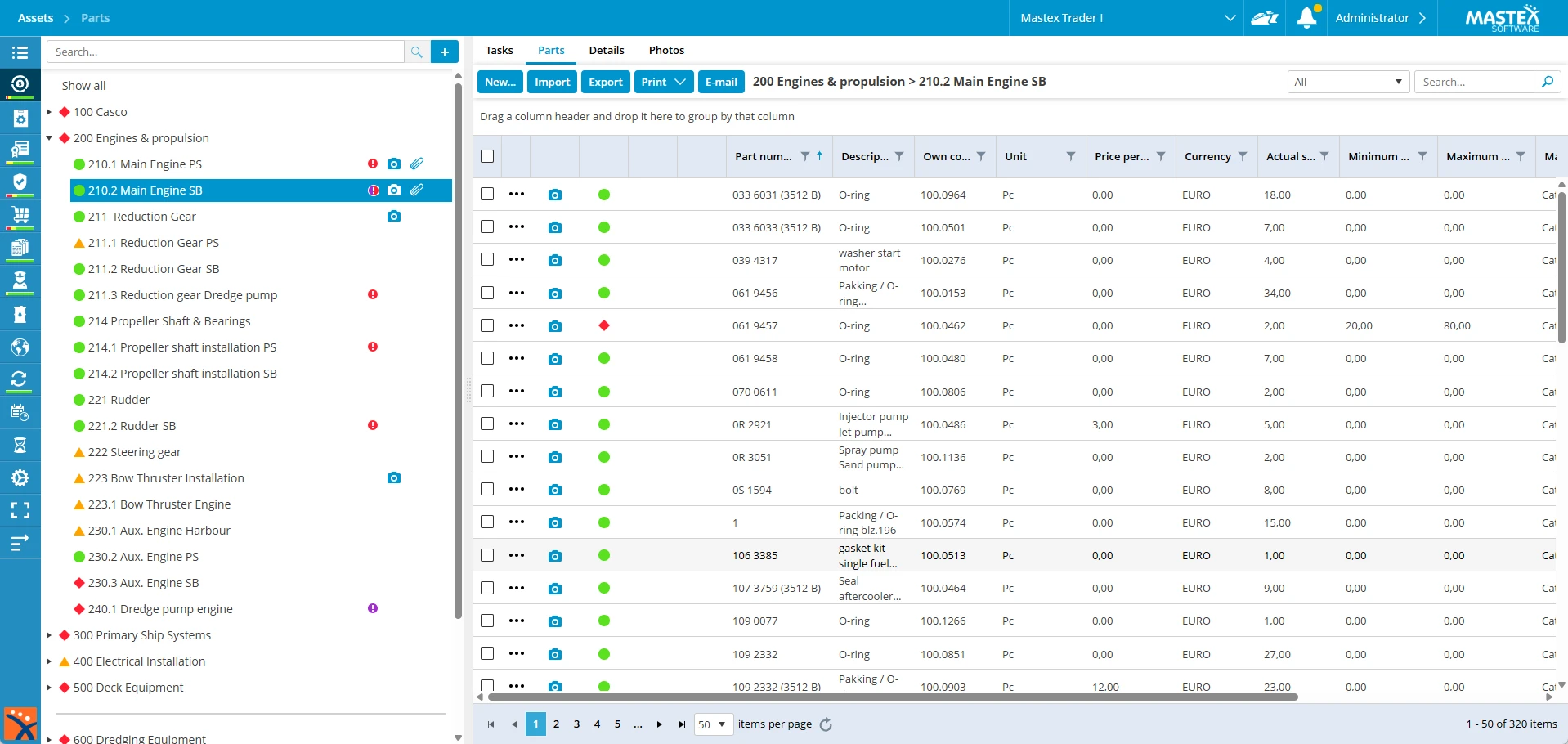
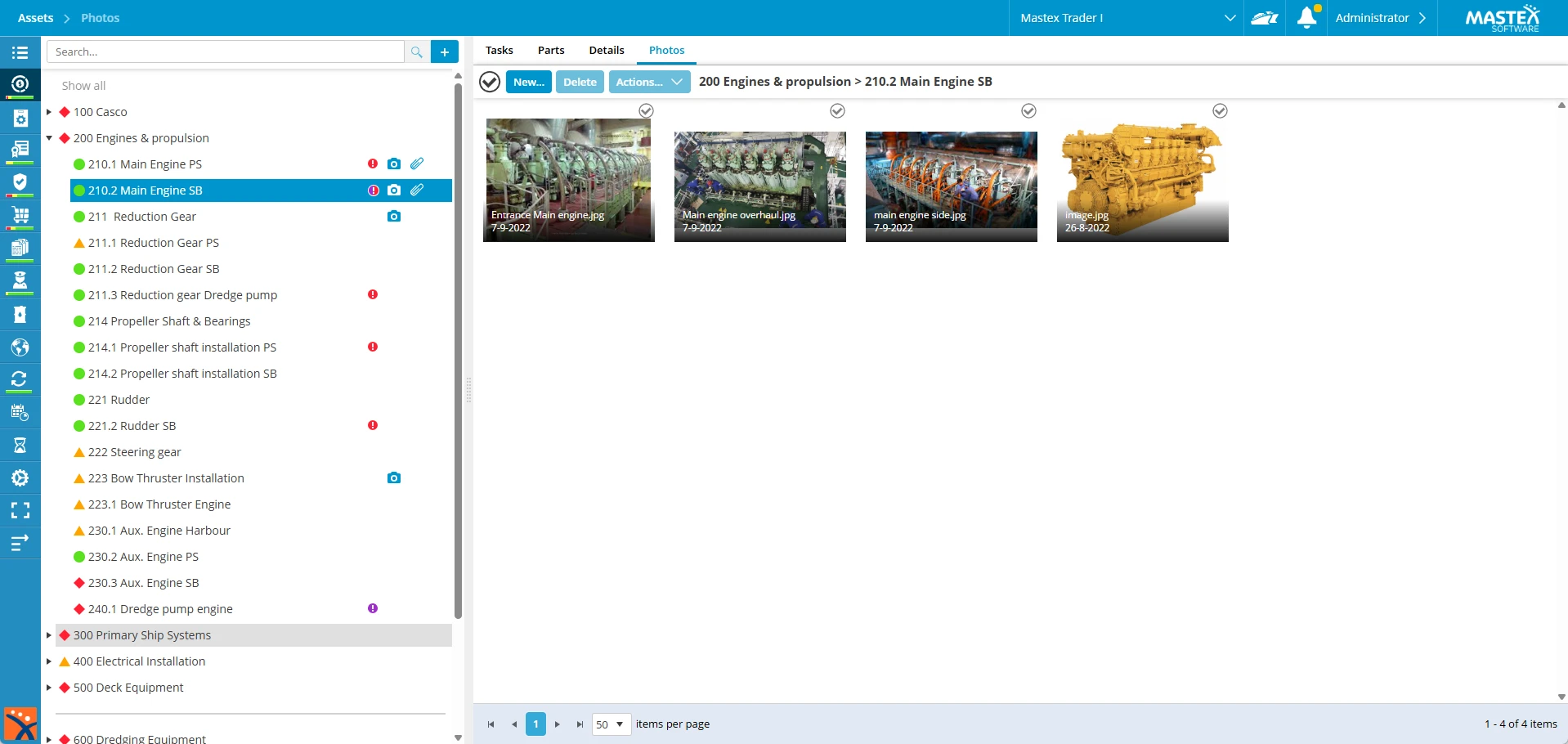
Keep track of every part on board
Easily manage spare parts, link supplier details and attach manuals, declarations or photos. Set minimum and maximum stock levels and locate any part in seconds. Print DYMO-compatible labels and manage your data with easy Excel import and export.
Whether you’re restocking or preparing for inspection, MXSuite keeps you in control.

The Assets Parts module covers:
- Product details (e.g. part numbers and manuals)
- Supplier data including pricing and delivery time
- Documentation like Material Declarations and sDocs (IHM)
- Images
- Stock data and storage location
- Label printing (DYMO compatible)
- Import and export in Excel format
What our clients say about us

"MXSuite helps in making maintenance and inventory clearer; it gives insight into the history and supports doing the necessary tasks on time."
Wim Blonk
Founder of Afresh

"The flexibility provided by both MXSuite and Mastex support is second to none and has allowed us to tailor the system so that it fulfils our exact needs"
Patrick Speak
Chief Engineer at My Solaris

“The ease of use and clear overview of all tasks related to maintenance, inventory, certificates and documents ensure that both our office and crew can work efficiently.”
Kim Heiniö
Managing Director at Al Mare Consulting
More than software: partners in fleet management
At Mastex we believe in partnerships. From the first demo to full implementation we work closely with you to set up MXSuite in a way that fits your fleet and your everyday business. You decide which modules you need and we help you combine them into a smart, streamlined solution. Whether you’re starting with maintenance or expanding to certificates, projects or QHSE we make sure everything works together. Simple, effective and tailored to your operations.


Are you ready to discover our MXSuite Assets Parts Module?
FAQ
Efficient spare parts management is critical for maintaining vessel uptime and controlling operational expenditure (OPEX). To prevent duplication, avoid ‘dead stock’, and ensure audit readiness, a professional maritime inventory system should have the ability to register and track:
- Part numbers (OEM and internal)
- Descriptions and categories
- Hazardous materials
- Units of measure
- Supplier references
- Minimum and maximum stock levels
- Warehouse and locations
The benefit with MXSuite? Fully integrated with the Assets Tasks module allowing to issue parts directly against work orders and auto-reservation of parts
Effective maritime spare parts management helps reduce vessel downtime, improve operational reliability, and lower operating expenses (OPEX). By maintaining accurate inventory records, shipping companies can ensure critical parts are available when needed while avoiding unnecessary stock purchases and excess inventory.
A robust maritime inventory system should track part numbers (OEM and internal references), detailed descriptions, hazardous material information, units of measure, supplier references, minimum and maximum stock levels, and storage locations. Accurate and complete data supports efficient procurement, maintenance planning, and inventory control.
Companies can reduce dead stock by maintaining accurate inventory records, setting appropriate minimum and maximum stock levels, and regularly reviewing stock usage and consumption patterns. Identifying obsolete or slow-moving items early helps prevent overstocking and reduces unnecessary storage costs.