This decade is transformative because the cost of ‘doing nothing’ has become measurable. Between carbon taxes, stricter bank lending criteria (Poseidon Principles), and the immediate operational impact of emission ratings, decarbonisation has moved from the CSR report to the balance sheet.
The regulatory landscape
To navigate this shift, fleet managers must stay ahead of both international and regional frameworks such as:
- IMO – CII & EEXI: Since January 2023, the Energy Efficiency Ship Index (EEXI) and the Carbon Intensity Indicator (CII) have been mandatory. CII ratings (A to E) determine a vessel’s operational efficiency; a low rating can directly affect a ship’s marketability and value.
- EU ETS (Emissions Trading System): Since 2024, the shipping industry has been integrated into the EU ETS. Large ships entering EU ports must now monitor, report, and surrender allowances for their CO2 emissions. This introduces a direct financial penalty for every tonne of carbon emitted.
- FuelEU Maritime: Coming into effect in 2025, this regulation focuses on the greenhouse gas intensity of the energy used on board, pushing the industry towards renewable and low-carbon fuels.
Addressing the implementation gap: three critical pitfalls
Despite the clear mandates, many shipping companies struggle to translate regulatory requirements into efficient daily workflows. The shift toward decarbonisation requires more than just new fuels; it requires a digital evolution. However, several common strategic errors often undermine these efforts:
1. The vulnerability of ‘Excel-based’ compliance
Many shipowners still rely on manual data entry in Excel to track fuel consumption and emissions. This creates Data Silos. Excel lacks a verifiable audit trail, which is a major liability during mandatory third-party verifications. Without a centralised database, the risk of ‘dirty data’ leading to an incorrect (and costly) CII rating is dangerously high. Furthermore, spreadsheets cannot scale with the increasing complexity of multi-regional reporting.
2. Treating compliance as an administrative task
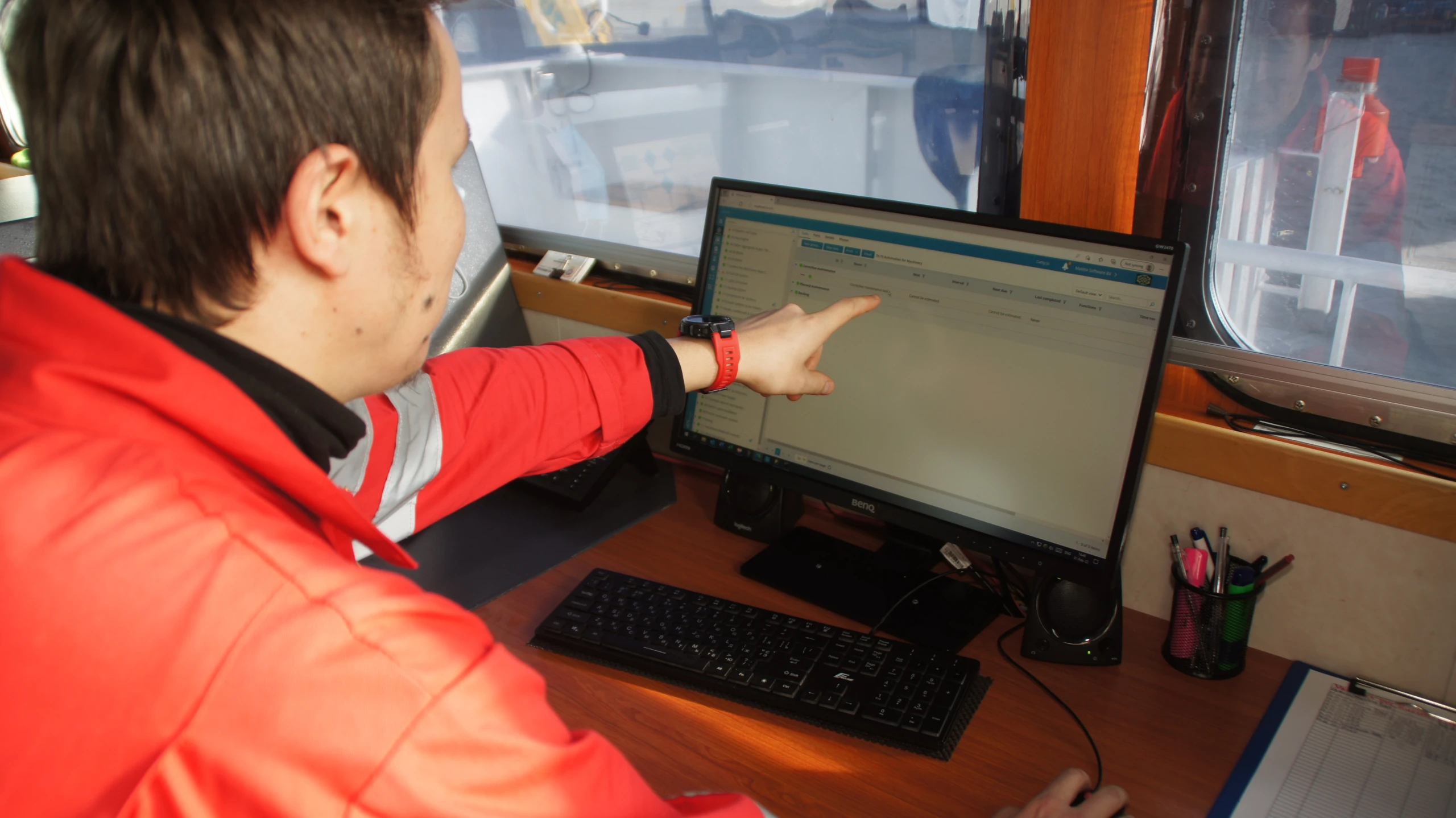
If data only flows from the ship to the office for a year-end report, the opportunity for improvement is already lost. True decarbonisation happens at sea, not in a boardroom. When crews lack real-time visibility into their performance against their target CII rating, they cannot make the necessary adjustments to speed, trim, or engine loads. For software to be effective, it must serve as an operational tool for the crew, rather than an administrative burden for the office.
3. Data accumulation without integrity or ownership
In the era of Big Data, collecting vast amounts of (sensor) information is useless if it lacks structure. Without a ‘Single Source of Truth’ where fuel data is directly linked to a ship management system, it is impossible to perform a root-cause analysis. Is a vessel underperforming due to hull fouling, or is a specific engine component failing? Only an integrated system provides the context needed to turn raw data into actionable maintenance strategies.
How ship management software bridges the gap
The winners in this decade will be those who replace fragmented spreadsheets with integrated ship management systems. MXSuite allows you to synchronise maintenance tasks with emission performance, ensuring that your fleet is not just ‘compliant’ but operationally superior. By centralising your data, you reduce the risk of audit findings and gain the insights needed to lower your carbon intensity.
Stop surviving audits and start optimising your fleet. Discover our ship management software MXSuite and request a demo.
FAQ
How does MXSuite help with EU ETS compliance? MXSuite centralises fuel consumption and voyage data, providing the accurate, structured reporting required for MRV (Monitoring, Reporting, and Verification) which forms the basis of EU ETS allowance calculations.
Why is integrated software better than a standalone emission tracker? An integrated system like MXSuite links emissions to maintenance (Assets Tasks and Assets Parts) and purchasing. This allows you to see how technical status directly impacts carbon intensity, enabling proactive improvements rather than just reactive reporting.
Can software help improve my vessel’s CII rating? Yes. By providing insight into performance, fleet managers can make informed operational changes, such as hull cleaning or technical upgrades, before a poor rating is finalised at the end of the year.